

Urinary issues are among the most common health problems in domestic cats. Feline lower urinary tract disease (FLUTD) affects roughly 1.5% of cats seen by veterinarians each year, and diet plays a central role in both preventing and managing the condition. Choosing the right food can reduce the risk of crystal formation, support bladder health, and help cats who have already experienced urinary problems stay comfortable long-term.
This guide walks through what to look for in a urinary-support cat food, the differences between wet and dry options, how to transition your cat safely, and which products are worth considering.
Why Diet Matters for Feline Urinary Health
A cat’s urine chemistry is directly shaped by what it eats. When the diet delivers poor hydration, high mineral concentrations, or the wrong pH balance, the urine becomes an environment where crystals can form and persist. The two most common crystal types in cats are struvite (magnesium ammonium phosphate) and calcium oxalate, and they require opposite management strategies: struvite crystals dissolve in acidified urine, while calcium oxalate crystals are less likely to form in a more neutral environment.
Key dietary factors that influence urinary health include:
-
Moisture content: Higher water intake increases urine volume and dilutes mineral concentrations.
-
Magnesium and phosphorus levels: Elevated levels contribute to struvite crystal risk.
-
Sodium content: Moderate sodium can encourage water intake, increasing urine output.
-
Protein quality: High-quality animal protein supports lean muscle and produces less urinary waste.
-
Urine pH: Target ranges differ by crystal type but generally fall between 6.0 and 6.5 for struvite control.
Wet Food vs. Dry Food for Urinary Support
Veterinary consensus strongly favors wet food for cats with urinary problems. Cats evolved in arid environments and have a naturally low thirst drive, meaning they rarely drink enough water on their own to compensate for a dry-food-only diet. Wet food typically contains 75 to 80 percent moisture compared to 8 to 10 percent in kibble, making a meaningful difference in daily water intake without requiring the cat to drink from a bowl.
That said, dry urinary-support formulas have a legitimate place, particularly for:
-
Multi-cat households where feeding stations need to remain accessible
-
Cats with dental disease that benefit from the mechanical action of chewing kibble
-
Owners who need a more economical long-term solution
-
Cases where a veterinarian prescribes a specific dry therapeutic diet
The most practical approach for many cats is a combination: wet food as the primary meal and a limited amount of urinary-support dry food, if needed. Always provide a separate source of fresh water regardless of diet type.
How to Read a Urinary Health Food Label
Pet food labels can be difficult to interpret without a reference point. When evaluating a urinary-support formula, look for the following:
Guaranteed Analysis
The guaranteed analysis panel lists minimum crude protein and fat percentages, plus maximum moisture and fiber. For urinary diets, check that moisture is listed high (wet foods) and that magnesium is disclosed separately, ideally below 0.1% on a dry-matter basis.
AAFCO Statement
Look for a statement confirming the food meets AAFCO nutritional profiles for adult maintenance or all life stages. Therapeutic urinary diets are exempt from this labeling requirement because they are dispensed under veterinary guidance, but any general-sale food should carry it.
Ingredient List
Named animal proteins (chicken, salmon, turkey) should appear first. Avoid foods where corn gluten meal, soy, or plant-based protein concentrates dominate the first five ingredients, as these can shift urinary pH in unpredictable ways.
pH and S/O Index Notation
Some brands, particularly prescription lines, list a urinary pH target or reference an S/O (struvite and oxalate) index. This notation indicates the food has been tested in feeding trials and shown to produce urine chemistry unfavorable to both crystal types.
Top Cat Urinary Health Food Recommendations
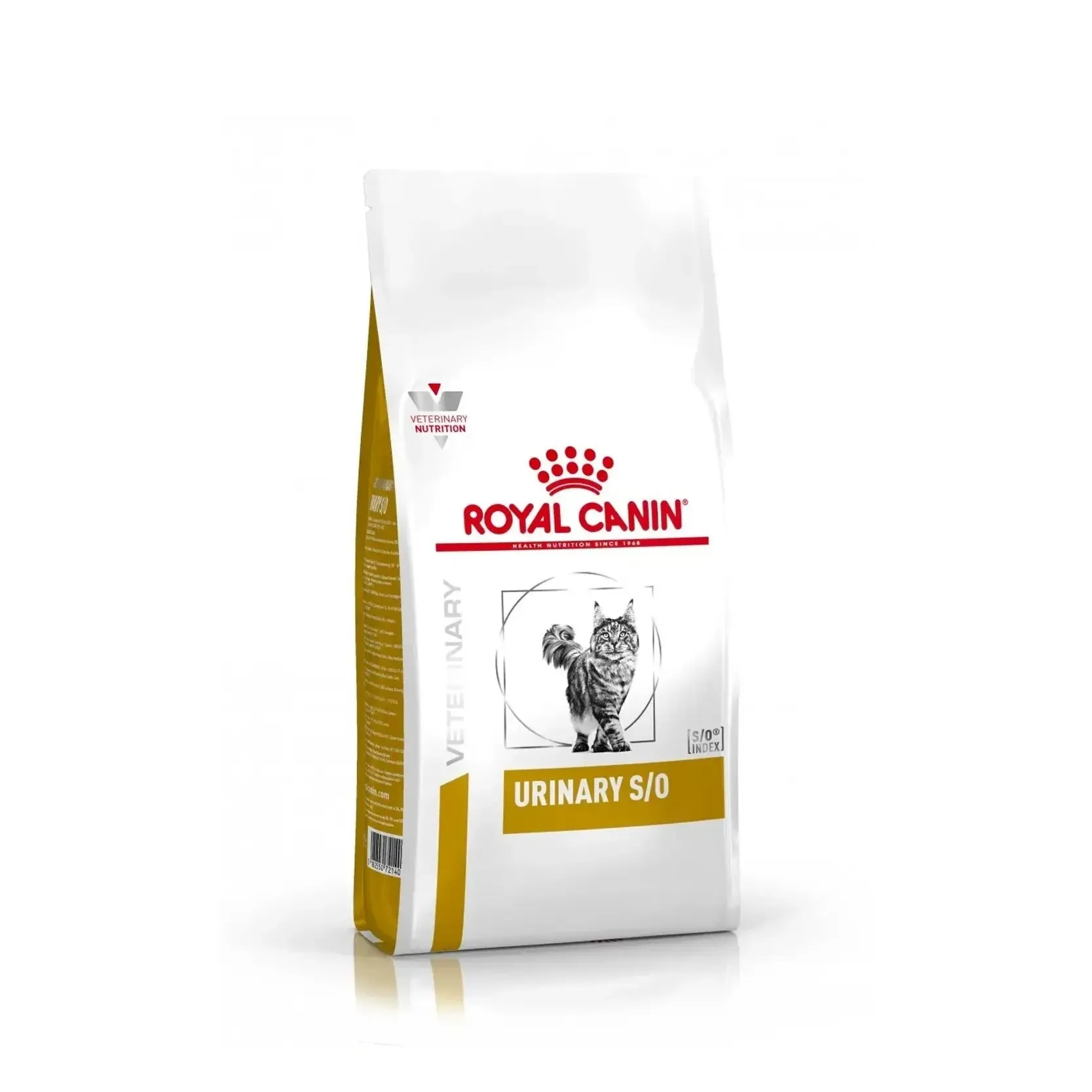
1. Royal Canin Veterinary Diet Urinary S/O (Dry)
Royal Canin’s prescription urinary line is one of the most extensively studied therapeutic cat foods available. The royal canin urinary formula creates a urinary environment with a low relative supersaturation (RSS) score for both struvite and calcium oxalate, meaning neither crystal type is thermodynamically likely to form in the urine. Clinical feeding trials support its use for dissolving existing struvite crystals and preventing recurrence of both crystal types. It is dispensed by veterinarians and is appropriate for long-term use in cats with confirmed urinary disease.
The dry format uses a controlled mineral profile and includes moderate sodium to encourage water consumption. It is best combined with adequate water access or used alongside wet urinary food for cats who struggle to stay hydrated.
2. Hill’s Prescription Diet c/d Multicare (Wet and Dry)
Hill’s c/d Multicare is formulated to address the full spectrum of FLUTD causes, not just crystal type. It targets stress-related cystitis, infection, and idiopathic disease as well as struvite and oxalate crystals. The wet version is particularly useful for cats with recurrent idiopathic cystitis, where increased hydration is part of the therapeutic strategy. Both formats are backed by clinical studies.
3. Purina Pro Plan Veterinary Diets UR Urinary St/Ox
Purina’s UR formula is well-regarded for cats who need high palatability in a prescription diet. Some cats with urinary disease experience reduced appetite, and UR’s flavor profile tends to encourage consistent eating, which matters for cats that need to maintain body condition while managing a chronic condition. It addresses both struvite and oxalate risk and is available in both wet and dry formats.
4. Blue Buffalo Natural Veterinary Diet W+U (Weight and Urinary Care)
A useful option for overweight cats with concurrent urinary issues. Obesity is a significant risk factor for feline lower urinary tract disease, particularly in indoor cats, so addressing both problems with one diet can be practical. Blue Buffalo’s W+U formula provides controlled calories alongside a urinary pH target, available with a veterinary authorization.
5. Over-the-Counter Options with Urinary Support Claims
For cats without a confirmed diagnosis, some over-the-counter foods include urinary health claims or pH-management formulas. Royal Canin and Hill’s both produce non-prescription versions of their urinary support lines. These are appropriate for cats at elevated risk (male, indoor, overweight, previous episode) but should not replace veterinary diagnosis for cats with active symptoms. Any cat straining to urinate, passing blood, or vocalizing in the litter box requires immediate veterinary attention.
Ingredients to Prioritize and Ingredients to Limit
Prioritize
-
Named animal protein as the first ingredient (chicken, turkey, salmon, tuna)
-
High moisture content in wet food (above 75%)
-
Omega-3 fatty acids (EPA and DHA) from fish oil for anti-inflammatory support
-
Cranberry extract or D-mannose in some OTC formulas for bacterial adhesion prevention
-
Controlled magnesium and phosphorus
Limit or Avoid
-
Unnamed meat by-products as the primary protein source
-
Corn gluten meal or plant protein isolates in the first five ingredients
-
Artificial preservatives (BHA, BHT, ethoxyquin) in long-term therapeutic diets
-
Excessive ash content (above 8% on dry-matter basis)
-
Foods without AAFCO compliance statements for non-prescription diets
Transitioning Your Cat to a Urinary Health Diet
Cats are neophobic eaters by instinct, and sudden food changes commonly trigger gastrointestinal upset and food refusal. A proper transition is especially important when switching to a therapeutic diet, since a cat that refuses to eat the new food provides none of the intended benefits.
A reliable transition schedule:
-
Days 1 to 2: 25% new food, 75% current food
-
Days 3 to 4: 50% new food, 50% current food
-
Days 5 to 6: 75% new food, 25% current food
-
Day 7 onward: 100% new food
If the cat refuses at any stage, hold at that ratio for an additional two to three days before advancing. Warming wet food slightly (to body temperature, not hot) can enhance aroma and improve acceptance. Adding a small amount of low-sodium broth to dry food can help during transition.
Never allow a cat, especially an overweight one, to go more than 24 to 48 hours without eating, as this creates risk for hepatic lipidosis (fatty liver disease), a serious and potentially fatal condition.
Additional Strategies to Support Urinary Health
Diet is the most important lever, but it works best alongside other environmental and management strategies.
Increase Water Intake
Place multiple water sources around the home, separate from food bowls. Many cats prefer moving water and will drink more from a circulating pet fountain than a static bowl. Glass or stainless steel is preferable to plastic, which can develop biofilm and deter drinking.
Reduce Stress
Feline idiopathic cystitis (FIC) is strongly stress-linked. Common stressors include changes in routine, new pets or people in the household, insufficient litter boxes, and loud environments. The recommended guideline is one litter box per cat plus one additional box, placed in quiet, accessible locations.
Maintain Healthy Weight
Obesity significantly raises FLUTD risk. Indoor, neutered male cats are particularly prone to weight gain and have a higher baseline incidence of urinary disease. A body condition score assessment from a veterinarian provides a more reliable weight target than general weight guidelines.
Schedule Regular Veterinary Monitoring
Cats on long-term therapeutic urinary diets benefit from periodic urine analysis to confirm the diet is maintaining target pH and that no new issues have developed. Most veterinarians recommend recheck urinalysis at 4 to 6 weeks after diet change, then every 6 to 12 months for stable patients.
Frequently Asked Questions
Can I feed my cat a urinary diet without a veterinary diagnosis?
Over-the-counter urinary support foods are safe for healthy cats at elevated risk. Prescription therapeutic diets are designed for cats with confirmed urinary disease and should be used under veterinary guidance, partly because the controlled mineral profiles in some therapeutic diets are not appropriate for cats without the specific condition they are intended to manage.
How long does it take for a urinary diet to work?
Struvite crystals can dissolve within 4 to 12 weeks on an appropriate dissolution diet when combined with adequate hydration. Prevention of recurrence is ongoing, meaning the cat typically stays on the diet long-term. Follow-up urinalysis confirms whether the treatment is working.
What if my cat has both urinary and kidney disease?
This is a common and challenging combination, as kidney diets restrict protein while urinary diets typically include higher protein to support pH balance. Veterinary guidance is essential in this scenario. Some formulas are designed to address both conditions, but individual cases vary and a nephrologist or internal medicine specialist consultation may be worthwhile for complex presentations.
Is grain-free food better for urinary health?
No evidence supports grain-free diets as specifically beneficial for feline urinary health. The key variables are moisture content, mineral levels, and urine pH, not whether the food contains grains. Some grain-free dry foods are actually higher in carbohydrate-dense legume ingredients that do not offer urinary benefits. Focus on the nutritional profile rather than grain presence.
Final Thoughts
Urinary health is one of the most manageable aspects of feline wellness when addressed early and consistently. The right diet forms the foundation, but it works best as part of a broader approach that includes hydration, stress reduction, and regular veterinary monitoring.
If your cat has experienced a urinary episode or shows symptoms of discomfort, get a veterinary diagnosis before choosing a food. Crystal type, pH, and concurrent conditions all influence which diet will actually help. A food that is ideal for one cat may be inappropriate for another with a different urinary profile.
For cats with confirmed struvite or mixed crystal disease, therapeutic options like the one above have strong clinical evidence behind them and remain the standard of care in veterinary practice.